
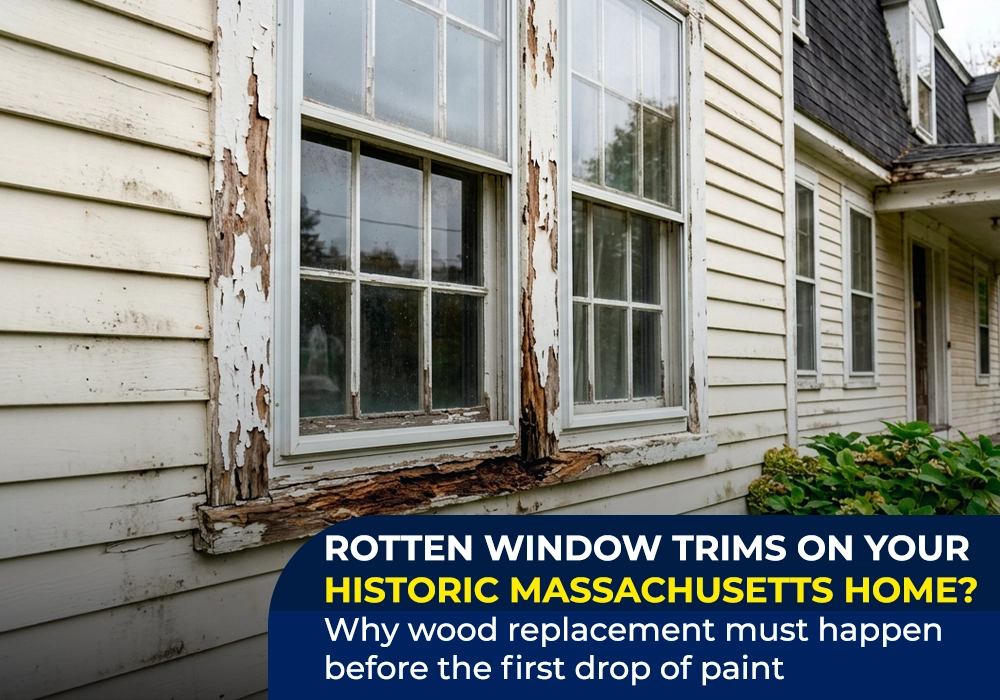
Owning a historic Colonial or Cape Cod home in Massachusetts comes with a unique kind of pride. These homes have character, history, and timeless curb appeal. But they also come with a hidden challenge that many homeowners underestimate: wood deterioration around windows.
If you’ve noticed peeling paint, cracked trims, or soft wood near your windows, it’s not just a cosmetic issue. It’s a structural warning sign. And understanding what’s happening here can save you thousands of dollars in the long run.
Why window trims fail in New England climates
Massachusetts homes are constantly exposed to some of the harshest weather conditions in the country. Over time, this environment creates the perfect scenario for wood damage.
Here’s what your home is up against:
- Snow buildup that sits against window frames for days or weeks
- Freeze and thaw cycles that expand and contract materials
- Rainwater infiltration through tiny cracks
- High humidity levels, especially in older homes
Wood is naturally porous. Once moisture gets in, it begins to break down from the inside out.
This leads to:
- Rotting and softening of trims
- Paint failure and peeling
- Mold and mildew growth
- Compromised window sealing
At this stage, the issue is no longer just about appearance. It’s about protection and structural integrity.
Why painting over rotten wood does not work
One of the most common misconceptions homeowners have is believing that a fresh coat of paint will “seal” the problem.
From a technical standpoint, that’s not how paint works.
Paint is designed to adhere to dry, stable, and properly prepared surfaces. When applied over rotten or moisture-damaged wood:
- Adhesion fails quickly
- Moisture gets trapped underneath
- The wood continues deteriorating
- Paint begins to bubble, crack, or peel prematurely
In other words, painting over damaged wood doesn’t fix the issue. It simply hides it temporarily while the problem gets worse underneath.
How to identify early signs of wood rot
Catching the issue early can make a significant difference in repair costs and project scope.
Here are key signs to look for:
- Paint that is consistently peeling in the same areas
- Wood that feels soft when pressed
- Visible cracks or splitting near window edges
- Dark spots or discoloration
- Gaps forming between trims and siding
If you notice any of these, it’s a strong indication that the wood beneath the paint is already compromised.
The correct process: repair before paint
To properly restore and protect your home, the process must address the root cause, not just the surface.
A professional approach typically includes:
1. full inspection
Every affected area is evaluated to determine the extent of moisture damage and rot.
2. removal of damaged materials
Compromised wood, including trims or sections of siding, must be fully removed. Partial fixes or patching often fail over time.
3. wood replacement
New, solid wood is installed to restore structural integrity and create a stable surface.
4. proper sealing and preparation
Before painting, the surface is sealed and prepped to prevent future moisture penetration.
5. high-quality paint application
Only after the structure is sound should paint be applied, ideally using premium products designed for durability and weather resistance.
Why this approach delivers better long-term results
Addressing the underlying issue before painting leads to:
- Longer-lasting paint jobs
- Reduced maintenance costs over time
- Better protection against moisture and mold
- Improved energy efficiency around windows
- Higher property value and curb appeal
This is not just about making your home look good today. It’s about ensuring it stays protected for years.
Conclusion: solving the problem the right way
If your home is showing signs of rotten window trims, the most important decision you can make is not rushing into painting.
The real solution is fixing what’s underneath first. That’s exactly where Zuck Painting INC stands out.
Instead of offering quick cosmetic fixes, their team focuses on doing the job correctly from the start. They identify damaged wood, replace compromised trims and siding, and only then apply premium coatings using trusted brands like Benjamin Moore and Sherwin-Williams.
With a fully insured team, no subcontractors, and a structured process that goes from start to finish without interruptions, homeowners get more than a paint job. They get a complete, reliable solution backed by a 2-year warranty.
If you want your home to look great and stay protected through New England’s toughest seasons, the answer isn’t just paint. It’s doing it right from the foundation up.