
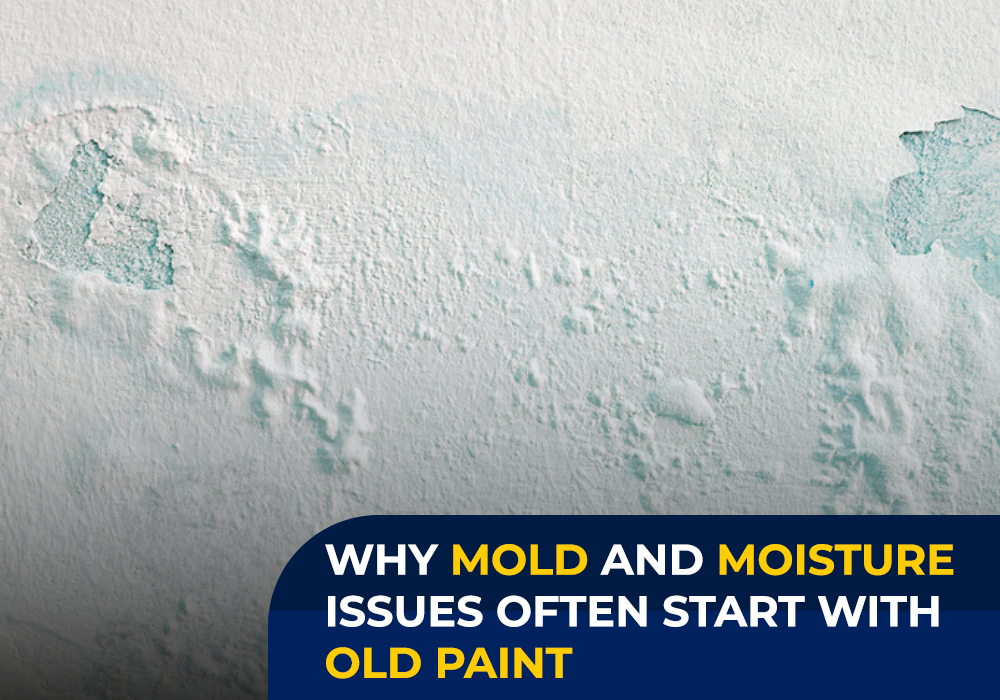
Mold and moisture problems are common concerns for homeowners in Massachusetts, Connecticut, and Rhode Island. Many people associate mold with leaks or poor ventilation, but one of the most overlooked causes is old or failing paint.
Paint is not just cosmetic. It plays a critical role in protecting walls, trim, and exterior surfaces from moisture intrusion. When paint breaks down, it creates an open door for humidity and water to damage the structure of the home.
Understanding how old paint contributes to mold issues can help homeowners prevent expensive repairs before they become unavoidable.
How paint protects your home from moisture
High-quality paint creates a protective barrier over drywall, wood, and masonry. This barrier slows moisture absorption and helps regulate how surfaces react to changes in temperature and humidity.
Over time, paint naturally wears down. In New England, seasonal changes, humidity, and temperature swings accelerate this process. As paint ages, it loses adhesion, becomes porous, and allows moisture to pass through.
Once moisture penetrates the surface, it can remain trapped behind walls or inside wood components, creating ideal conditions for mold growth.
Why does old paint fail faster in New England climates
Homes in Massachusetts, Connecticut, and Rhode Island are exposed to fluctuating weather conditions throughout the year. Cold winters, humid summers, and frequent rain place constant stress on painted surfaces.
Exterior paint is especially vulnerable. As it expands and contracts with temperature changes, small cracks form. These cracks may not be visible at first, but they allow water to seep in during rain or snowmelt.
Interior paint is also affected by humidity from kitchens, bathrooms, and basements. Without proper moisture resistance, old paint absorbs humidity instead of blocking it.
The connection between moisture intrusion and mold growth
Mold requires three things to grow: moisture, organic material, and limited airflow. Painted surfaces often cover drywall and wood, both of which provide an organic food source for mold.
When old paint allows moisture to penetrate, mold can begin growing behind walls, under trim, or in corners where air circulation is limited. By the time mold becomes visible, the problem is often more advanced than homeowners realize.
This is why simply cleaning visible mold does not solve the root issue. Without addressing the failing paint and underlying moisture exposure, mold is likely to return.
Common signs that paint is no longer protecting your home
Homeowners often overlook early warning signs that paint is failing. Peeling, bubbling, or cracking paint are obvious indicators, but discoloration, soft drywall, and persistent musty odors are also red flags.
On exterior surfaces, faded paint and exposed wood increase the risk of moisture absorption. On interior walls, stains near windows, ceilings, or baseboards may signal trapped moisture behind the paint layer.
Ignoring these signs allows moisture damage to spread, increasing repair costs over time.
The financial impact of delaying repainting
Postponing repainting may seem like a way to save money, but it often leads to higher expenses later. Once moisture damages drywall or wood, repairs become more complex and costly.
Mold remediation, drywall replacement, carpentry repairs, and structural treatments quickly exceed the cost of proactive painting. In some cases, moisture damage can also affect insulation and framing, further increasing repair expenses.
Repainting at the right time protects surfaces and helps homeowners avoid these additional costs.
Why professional painting makes a difference in moisture prevention
Not all paints provide the same level of protection. Professional painters use proper surface preparation, moisture-resistant primers, and high-quality paints designed for specific environments.
Skipping preparation steps or using low-quality materials reduces the effectiveness of the paint barrier. This is why many homeowners experience paint failure within a few years after choosing cheap or rushed work.
Professional painters also identify problem areas before painting, such as hidden moisture sources, damaged surfaces, or ventilation issues. Addressing these issues before applying new paint improves long-term performance.
Interior vs exterior painting and moisture control
Exterior painting plays a critical role in keeping rain and humidity from penetrating the home’s structure. Properly painted siding, trim, and carpentry reduce the risk of water infiltration during storms.
Interior painting helps control moisture from daily activities such as cooking, showering, and heating. Kitchens, bathrooms, basements, and laundry areas benefit the most from moisture-resistant coatings.
Together, interior and exterior painting work as a system to protect the home from moisture-related damage.
How often should homes be repainted to prevent mold issues
The ideal repainting schedule depends on exposure, surface type, and environmental conditions. Exterior surfaces typically require repainting more frequently due to weather exposure, while interior surfaces may last longer if properly maintained.
Homes with higher humidity levels or older construction may require more frequent evaluations. Regular inspections by a professional painter help homeowners determine when repainting is necessary before damage occurs.
Why homeowners regret waiting too long to repaint
Many homeowners only address painting after visible damage appears. By that point, the cost of repairs has already increased, and the project becomes more disruptive.
Repainting before paint failure occurs preserves the condition of the home and maintains its value. It also provides peace of mind, knowing that surfaces are protected against moisture intrusion.
Professional painting services in New England
Zuck Painting INC provides professional interior and exterior painting services designed to protect homes from moisture and mold-related issues. With a fully insured team and no subcontractors, projects are completed efficiently and with attention to detail.
Using premium materials from Sherwin-Williams and Benjamin Moore, Zuck Painting focuses on long-lasting results that protect your home as well as improve its appearance.
If you live in Massachusetts, Connecticut, or Rhode Island and are concerned about moisture or mold issues, contact Zuck Painting INC for a professional evaluation and estimate.
Preventing mold often starts with something simple: protecting your surfaces before damage begins.